
Ramjet Trash Compactor
Apartment Trash Compactor: Streamline Waste, Maximize Space!
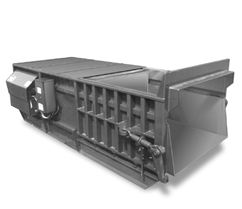
Ramjet Trash Compactor: The Heavy-Duty Solution for High-Volume Waste Disposal
Facilities that generate large volumes of trash every day eventually run into the same problem: standard dumpsters and rear-load containers simply cannot keep up. Pickup costs climb, dumpsters overflow between collections, and labor hours get wasted hauling loose, bulky waste back and forth. This is exactly the gap a ramjet trash compactor is built to close. Designed for serious, around-the-clock waste reduction, a ramjet trash compactor crushes bulky refuse down to a fraction of its original size, cutting hauling frequency and giving facility managers control over their waste stream instead of the other way around.
At The Mark Costello Co., the RamJet line has been engineered specifically for industrial, commercial, and municipal applications where volume, durability, and uptime matter most. Whether you’re running a distribution center, a transfer station, a manufacturing plant, or a multi-family housing complex, a ramjet trash compactor is the kind of equipment that pays for itself through reduced hauling costs and fewer service interruptions.
What Is a Ramjet Trash Compactor?
A ramjet trash compactor is a stationary, hydraulically powered compaction system that uses a heavy steel ram to crush waste materials inside a charge box before pushing the compacted load into an attached container. Unlike a small apartment-style chute compactor, a ramjet trash compactor is purpose-built for high tonnage operations — think crates, pallets, cartons, packaging waste, and general industrial refuse that would otherwise require constant manual breakdown.
The “ram” in the name refers to the compaction mechanism itself: a thick steel plate, often supported by cast iron shoes riding on replaceable wear strips, that drives forward with tens of thousands of pounds of crushing force. Depending on the model, a ramjet trash compactor can generate anywhere from roughly 30,000 to well over 56,000 pounds of compaction force, enough to flatten oversized cartons, wood crates, and dense commercial trash into a dense, transportable mass.
These units are typically key-operated and fully automatic. An operator dumps waste into the charge box, turns the key, and the compaction cycle runs on its own, shutting down automatically once complete. That simplicity is part of why a ramjet trash compactor is so widely used across warehouses, transfer stations, and processing facilities — operators don’t need specialized training to run one safely and efficiently.
Key Features and Build Quality Behind a RamJet Trash Compactor
Not every compactor on the market is engineered for heavy industrial duty, and that distinction matters once equipment is running multiple cycles a day under demanding conditions. The Mark Costello Co. builds its RamJet compactors with several features specifically aimed at long-term reliability and performance:
Heavy-duty steel construction. RamJet units feature reinforced charge box liners, thick breaker bars, and abrasion-resistant steel floors designed to withstand the constant impact of dense, sharp-edged industrial waste.
Wear-resistant ram design. The packing ram rides on replaceable wear strips supported by cast iron shoes, a design that protects the charge box floor from direct ram contact and significantly extends the life of the unit while reducing compaction-robbing friction.
Industrial-grade electrical and hydraulic systems. UL-listed control components and robust hydraulic power units keep a ramjet trash compactor running consistently, even in demanding environments with frequent duty cycles.
Large charge box openings. Many RamJet models feature oversized openings, in some cases approaching five feet by six feet, to accommodate bulky cartons, pallets, and oversized industrial waste without requiring pre-breakdown.
Simplified, automatic controls. Two-button operation, key-controlled access, and automatic shutdown after each cycle make the equipment easy to operate consistently and safely across shifts and personnel changes.
Optional add-ons for specialized needs. Custom hoppers, cart dumpers, security chutes, multi-cycle timers, and fullness-monitoring technology can all be integrated to match a facility’s specific waste handling workflow.
Mark-Costello’s full RamJet lineup spans multiple compaction sizes and force ratings, from compact 2.5 cubic yard units to high-capacity 5.5 cubic yard heavy-duty models built for transfer station applications. That range allows facility managers to match the right ramjet trash compactor to their actual waste volume, rather than over- or under-investing in capacity they don’t need. If your operation handles especially large volumes, it’s worth reviewing the full lineup of heavy-duty stationary compactors to compare force ratings and charge box dimensions side by side.
Why Choose Us
Decades of Experience
Mark Costello has been a trusted name in waste management for decades, delivering reliable and effective solutions that businesses count on.
Cutting-Edge Technology
Using the latest technology, We ensures that waste management systems are efficient and up to industry standards, from food digesters to compactors.
Customized Solutions
At Mark Costello,we provides tailored waste management solutions that fit each business’s unique needs, ensuring a smooth integration into existing operations.
Focused on Sustainability
Mark Costello is dedicated to helping businesses achieve their sustainability goals by turning waste into valuable resources, supporting a greener future.
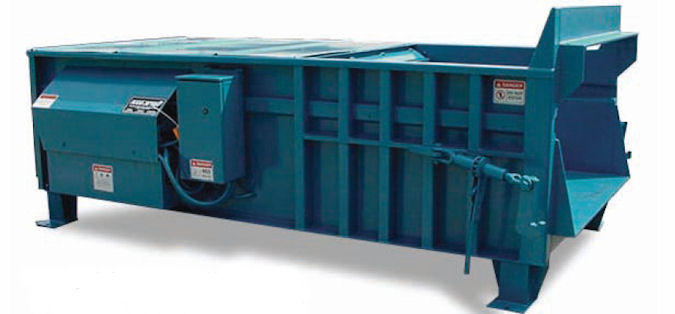
Choosing the Right Ramjet Trash Compactor for Your Facility
Selecting the correct ramjet trash compactor isn’t a one-size-fits-all decision. The right unit depends on waste volume, material type, available space, and how the equipment fits into the broader collection and hauling workflow. A few questions are worth working through before making a purchase or rental decision:
How much waste does the facility generate daily?
Facilities producing a steady stream of bulky packaging or crating waste typically need a higher cubic yard capacity than a site with lighter, more sporadic trash volume.
What type of material is being compacted? Dense, hard-to-compact materials like wood crates and skids generally require a heavy-duty model with reinforced steel construction, while lighter cardboard and general trash may be handled efficiently by a standard-duty unit.
Is the site set up for a transfer station-style operation? Locations serving multiple collection vehicles, or operating as a community drop-off point, often benefit from the higher force and larger container capacity found in transfer station-grade compactors.
What additional equipment integration is needed? Cart dumpers, hoppers, chutes, and container-fullness monitoring systems can all streamline operation, particularly for facilities handling waste from multiple buildings or departments.
Working with an experienced provider matters here. The Mark Costello Co. has spent decades specializing in on-site compaction systems, and that depth of experience translates into practical guidance on sizing, container pairing, and optional equipment that actually fits a facility’s day-to-day operations rather than a generic recommendation. A correctly sized ramjet trash compactor, installed and supported by a knowledgeable team, becomes a long-term operational asset rather than just another piece of equipment taking up yard space
Send Us a Message
Send us a message with your questions or concerns and our team member will contact you. We’d love to hear from you.
Trusted by Those We Serve
Frequently Asked Questions
What is the difference between a ramjet trash compactor and a standard trash compactor?
A ramjet trash compactor is engineered for heavy-duty, high-volume applications, with reinforced steel construction, higher crushing force, and larger charge box openings than typical light-commercial compactors. Standard compactors are usually designed for smaller waste streams, while a ramjet trash compactor is built to handle industrial-scale refuse like crates, pallets, and bulky packaging on a continuous basis.
How much waste can a ramjet trash compactor process?
This depends on the specific model. Compaction force on RamJet units ranges from roughly 30,000 pounds up to over 56,000 pounds, with charge box capacities spanning from around 2.5 cubic yards to 5.5 cubic yards or more. Higher-capacity, heavy-duty models are typically used in transfer stations and large industrial settings where waste volume is significant.
Is a ramjet trash compactor difficult to operate?
No. Most ramjet trash compactor units are designed with simplified, key-operated controls and fully automatic compaction cycles. Operators simply load the charge box and start the cycle; the unit shuts down on its own once compaction is complete, making it straightforward to operate consistently across different staff and shifts.
What types of facilities typically use a ramjet trash compactor?
Distribution centers, warehouses, manufacturing plants, transfer stations, municipalities, and large multi-family housing communities are among the most common users. Any facility generating a consistent, high volume of bulky waste can benefit from the reduced hauling frequency and labor savings a ramjet trash compactor provides.
How do I know what size ramjet trash compactor my facility needs?
Sizing depends on daily waste volume, material type, and how the unit fits into your overall collection workflow. Mark-Costello works directly with facility managers to evaluate these factors and recommend the right ramjet trash compactor model, container pairing, and optional equipment for their specific operation.